3 Crucial Steps for Strategic Workforce Planning That Leaders Can’t Afford to Miss
Strategic workforce planning is no longer a nice-to-have. In a rapidly changing environment, organisations need to be proactive about whether they have the right people, with the right skills, in the right roles, at the right time.
Too often, workforce planning is treated as a reactive exercise, only addressed when vacancies rise, budgets tighten, or business priorities shift. But effective strategic workforce planning looks ahead. It helps leaders prepare for change, reduce risk, and build a workforce that can deliver future goals.
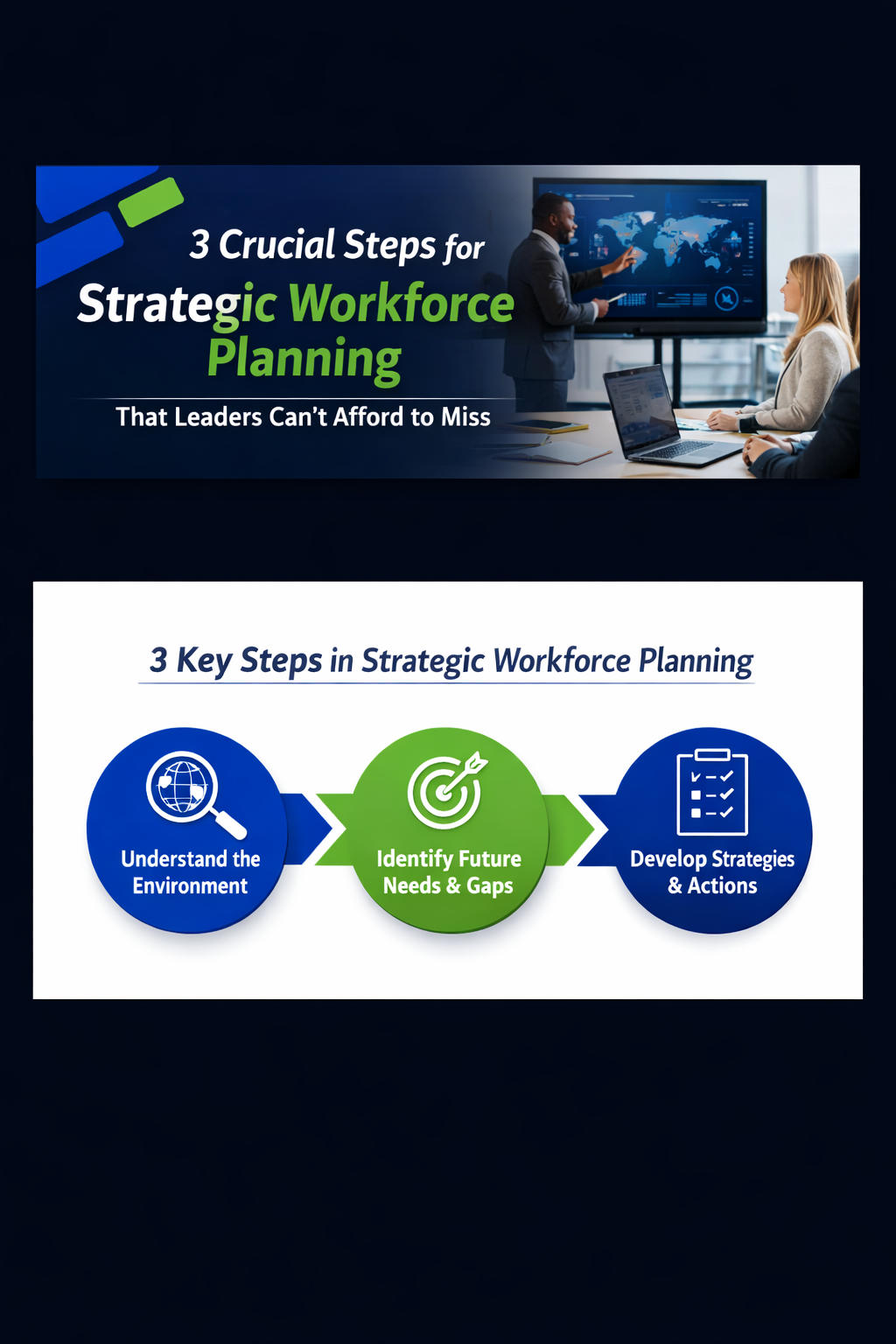
Here are three crucial steps every organisation should consider when undertaking strategic workforce planning.
1. Understand the Environment You’re Planning For
Before you can plan your workforce, you need to understand the context your organisation is operating in. Workforce decisions should never be made in isolation. External and internal factors shape workforce demand, capability needs, and organisational priorities.
This is why environmental scanning is such an important first step. Leaders should assess the forces that may affect their workforce now and into the future. These may include changing customer expectations, economic pressures, government policy, labour market conditions, technological disruption, and shifts in service delivery.
A useful way to begin is by asking:
What is changing in our operating environment?
What trends could affect our workforce needs over the next one to three years?
What internal changes, such as growth, restructuring, or new priorities, may affect workforce demand?
Tools such as PEST analysis, SWOT analysis, and scenario planning can help organisations identify risks and opportunities early. This creates a much stronger foundation for workforce planning and ensures decisions are aligned with reality, not assumptions.
2. Identify Future Workforce Needs and Gaps
Once you understand the environment, the next step is to determine what workforce you will need to deliver your strategy.
This means looking beyond current structures and considering future capability requirements. What roles will become more critical? Which skills will grow in importance? Are there functions that may need redesign, automation, or new ways of working?
At the same time, organisations need a clear view of their current workforce profile. This includes workforce size, capability, demographics, turnover risks, hard-to-fill roles, and areas of over- or under-capacity.
When you compare your future needs with your current workforce position, the gaps start to become visible. These gaps may relate to:
skills and capabilities
leadership depth
workforce capacity
critical roles
succession risk
attraction and retention challenges
This step is where strategic workforce planning becomes practical. It helps leaders move from broad strategy to clear workforce priorities.
3. Develop Practical Strategies and Actions
Workforce planning only adds value when it leads to action. After identifying your future needs and workforce gaps, the next step is to develop targeted strategies that address those gaps in a realistic and measurable way.
These strategies may include:
targeted recruitment for critical roles
upskilling or reskilling existing employees
succession planning for key positions
redesigning roles or team structures
improving employee retention and engagement
using data and workforce analytics to monitor trends and progress
The most effective workforce plans are not overly complex. They are practical, aligned to business priorities, and owned by leaders. They also recognise that workforce planning is not a one-off project. It should be reviewed regularly as business conditions change.
A good workforce plan gives decision-makers confidence. It supports smarter investment in people, reduces workforce risk, and helps organisations stay focused on what they need for the future.
